VAT on insurance total loss in the UAE: who charges what when a written-off asset goes to the insurer
When an insurer writes off your car or machine as a total loss and takes ownership of it as part of the claim settlement, you do not charge VAT on handing it over. FTA Directive No. 6 of 2026 says the transfer is not a supply of goods, provided you get nothing for it beyond the insurance compensation. If the insurer later sells the wreck, that sale is the insurer’s own supply.
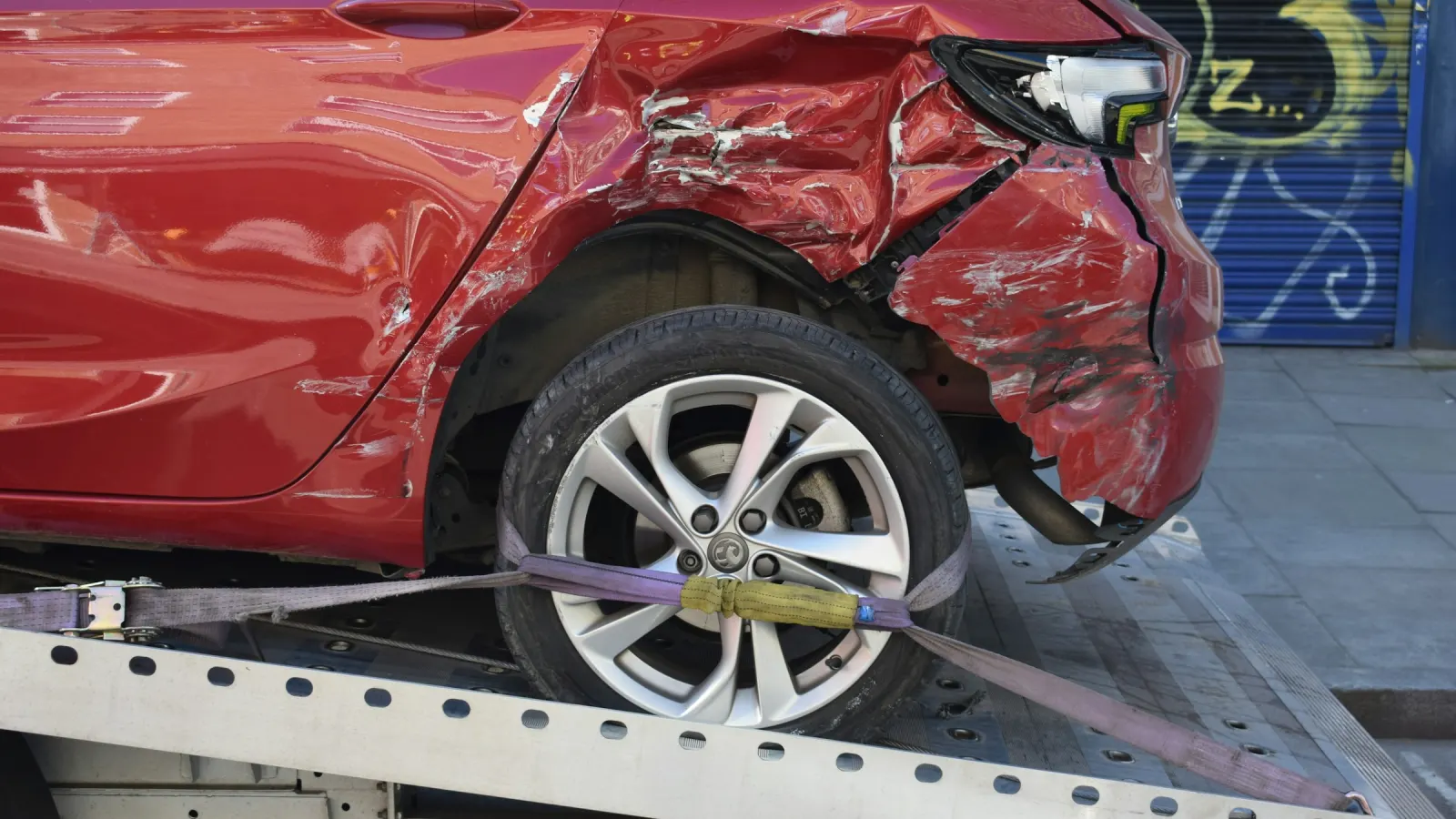
A van in your fleet is badly damaged in an accident. The insurer inspects it, decides a repair makes no sense, pays out the claim and takes the van. Its title moves from your company to the insurer. For VAT, the question is whether that handover is a sale of goods on which your company should charge VAT.
On 18 November 2026 the Federal Tax Authority answered it. Directive on Tax Transactions No. 6 of 2026 on Value Added Tax deals with one situation: the transfer of an insured asset to the insurer in cases of total loss. It has seven short clauses. This guide goes through them in order and then applies them to a written-off vehicle and to a piece of equipment.
FTA Directive No. 6 of 2026 is an FTA instruction that sets the VAT treatment when an insured asset is declared a total loss and ownership passes from the insured to the insurer as part of the claim settlement. It addresses both sides, the business that owned the asset and the insurer that takes it over. The text states no effective date of its own; its last clause says it will be published in the Official Gazette.
What counts as a total loss
A total loss, in the directive’s words, is an insured asset that “cannot be economically or safely repaired”. Either ground is enough. The repair may cost more than the asset is worth, or the asset may be repairable on paper but unsafe to put back into use.
The directive applies when two things happen together:
- the asset is deemed a total loss on one of those grounds; and
- ownership passes from the insured to the insurer as part of the settlement of the insurance claim.
A repair claim where you keep the asset falls outside it, and so does a write-off where the insurer pays out and leaves the wreck with you, because in neither case does ownership pass to the insurer. A sale of the asset to anyone other than the insurer is outside it too.
The text speaks of any insured asset. Cars and trucks are the usual case, but a forklift or a production line written off under a property policy is covered in the same way.
Is the transfer to the insurer a supply?
No, provided the transfer is not made in return for a separate consideration independent of the insurance compensation. Under Clause 1, when an asset is declared a total loss and ownership passes to the insurer as part of the claim settlement, the transfer is not a supply of goods for VAT, so there is no VAT to charge.
The relief covers a handover that is simply part of settling the claim. If the insurer also pays you a separate amount for the wreck, agreed apart from the claim and on top of the compensation, the condition in Clause 1 is not met. The directive does not say how such a deal is then treated; it only says when its own rule applies. Talk to your tax adviser before you sign anything of that kind.
For the insured business, the transfer of the asset does not appear as a sale in your VAT return. The directive does not mention invoices. A tax invoice records a supply, though, and here the FTA says there is none, so you do not issue a tax invoice to the insurer for handing over the asset.
Is the insurance payout consideration for the asset?
No. Clause 2 says the amount the insurer pays the insured as compensation for the insured loss under the insurance contract is not consideration for the transfer of ownership of the asset. Clause 3 adds that the value the insurer puts on the asset to assess the loss or calculate the compensation is not consideration either.
An insurer usually values the asset as it was just before the loss, pays roughly that figure and takes the asset. Read loosely, that looks like a purchase at market value. Clauses 2 and 3 rule out that reading: the payout is compensation for the loss under the policy, and the insurer’s valuation is the way the loss is measured. Neither is a price for the wreck.
The size of the payout therefore makes no difference. Whether the insurer pays the full insured value or a lower figure after a deductible, the transfer of the asset stays outside VAT as long as you receive nothing separate from that compensation.
Deregistration and paperwork don’t change the answer
A total loss brings formalities. A vehicle has to be deregistered with the traffic authority, the title has to move, and the insurer may ask for releases or other legal documents before it pays.
Under Clause 4, none of this affects the treatment. The rule in Clause 1 is not affected by any administrative, regulatory or legal procedure needed to settle the claim or move ownership to the insurer, and the directive names deregistration of the asset with the competent authority as one of them.
These steps can look like evidence of a sale. A signed transfer form, a cancelled registration card or an ownership change in a government system all record a change of owner. The FTA treats them as part of the claim settlement, and they leave the handover outside VAT.
When the insurer resells the salvage
The insurer rarely keeps the wreck. It sells it for parts or scrap, sends it to auction or transfers it to a salvage buyer.
Clause 5 deals with this second step. Once the insurer owns the asset, any sale or transfer of it to another person is a supply of goods made by the insurer. Its VAT treatment follows the general rules of the VAT Law and its Executive Regulation, with no special relief from the directive.
The directive splits the chain in two:
| Step | Who transfers | Supply for VAT? | Rule |
|---|---|---|---|
| Asset passes to the insurer as part of the claim | The insured business | No, if there is no separate consideration | Clauses 1 to 4 |
| Insurer sells or transfers the wreck to someone else | The insurer | Yes, a supply of goods by the insurer | Clause 5, general VAT rules |
The VAT on the salvage sale is the insurer’s matter and does not come back to the business that owned the asset. If you buy salvage from insurers as a dealer or scrap buyer, you are buying from the insurer under the ordinary rules. Where the goods are metal scrap and both sides are VAT registrants, the domestic reverse charge described in our guide to reverse charge, zero-rated and exempt supplies may apply to that sale.
Records both sides must keep
Clause 6 places the same duty on the insured and the insurer: each keeps the documents and records that show the asset was determined to be a total loss and that the insurance claim was settled.
The directive does not list the documents. For the insured business, a sensible file holds:
- the insurer’s written decision that the asset is a total loss;
- the claim settlement letter or agreement and proof of the payout;
- the document transferring ownership to the insurer;
- the deregistration or cancellation record, where the asset was registered;
- any correspondence showing that no amount was paid for the asset apart from the compensation.
If the FTA asks whether the condition in Clause 1 was met, the settlement papers are your evidence. Keep this file with the rest of your VAT records for the usual retention period, which our guide to UAE bookkeeping and record-keeping requirements explains.
Worked cases: a fleet car and a piece of equipment
The two cases below use only what the directive says. They carry no figures, because the treatment does not depend on the amount.
A fleet car
A VAT-registered logistics company insures its delivery cars. One is hit, and the insurer declares it a total loss because the repair would cost more than the car is worth. The insurer pays the claim under the policy, the company deregisters the car with the traffic authority and signs it over to the insurer. The company receives the compensation and nothing else.
- The handover of the car is not a supply of goods (Clause 1), so the company charges no VAT and issues no tax invoice for it.
- The payout is not consideration for the car (Clause 2), and neither is the insurer’s valuation of it (Clause 3).
- The deregistration and the signed transfer leave that unchanged (Clause 4).
- The insurer later sells the car at a salvage auction. That sale is the insurer’s own supply of goods under the general rules (Clause 5).
- The company and the insurer each keep the total-loss decision and the settlement papers (Clause 6).
A machine with a side payment
A manufacturer’s machine is damaged in a fire. The insurer’s assessor finds that it cannot be safely restored, and the insurer settles the property claim on a total-loss basis and takes ownership of the machine. It also offers an extra amount for the machine, agreed separately and outside the claim.
That extra payment is a separate consideration independent of the insurance compensation, so the condition in Clause 1 is not met for this deal and the directive does not settle its treatment. The manufacturer should not rely on Clause 1 here and should check the position with a tax adviser before signing. Had the insurer simply settled the claim and taken the machine, the handover would have stayed outside VAT, as with the fleet car.
Where this sits in your VAT routine
The directive leaves registration and filing as they were. It answers one question that comes up on a total-loss claim, and for the insured business the answer is usually that the transfer has nothing to report. The wider rules are in our UAE VAT registration and filing guide, and the return itself is covered in our guide on how to file a VAT return in the UAE.
How QuickTax helps
We check total-loss settlements against the condition the FTA set, keep the decision and settlement papers in your VAT file, and keep the handover of a written-off asset out of your VAT return.
See how our accounting and tax service works →
This material is for reference and is not tax advice. FTA Directive No. 6 of 2026 was issued on 18 November 2026 and states no effective date of its own. Always verify current requirements on the official resources of the FTA.
What this means for you
FTA Directive No. 6 of 2026 settles the VAT question on a total-loss claim. Three things to check when one comes up:
No VAT on the handover
When the insurer takes a written-off asset as part of the claim, you charge no VAT and issue no tax invoice for the transfer.
Watch for side payments
The rule holds only if you get nothing separate from the insurance compensation. An extra amount for the wreck takes the deal outside the directive.
Keep the claim file
Store the total-loss decision, the settlement papers and the ownership transfer with your VAT records.
Frequently asked questions
Do I charge VAT when my written-off car goes to the insurer?
No, as long as you receive nothing for the car apart from the insurance compensation. FTA Directive No. 6 of 2026 says that when an insured asset is a total loss and ownership passes to the insurer as part of the claim settlement, the transfer is not a supply of goods for VAT.
Is the insurance payout treated as the sale price of my car for VAT?
No. The compensation the insurer pays under the policy is not consideration for the transfer of the asset, and neither is the value the insurer sets to assess the loss or calculate the payout. The payout compensates your loss under the policy.
Does deregistering the vehicle change the VAT treatment?
No. The directive says administrative, regulatory or legal procedures needed to settle the claim or move ownership to the insurer do not affect the treatment, and it names deregistration of the asset with the competent authority as one of them.
Does the insurer charge VAT when it sells the wreck?
The insurer’s sale or transfer of the wreck to another person is a supply of goods made by the insurer. Its VAT treatment follows the general rules of the VAT Law and its Executive Regulation, so it is the insurer’s matter, not that of the former owner.
What proof should I keep in case the FTA questions a total-loss transfer?
Both the insured and the insurer must keep the documents and records showing that the asset was determined to be a total loss and that the claim was settled. In practice: the insurer’s total-loss decision, the settlement agreement and proof of payment, and the ownership transfer.