How to File a Corporate Tax Return in the UAE
One return a year, filed online through EmaraTax, due nine months after your financial year ends. Here is what the form asks for, what you need in hand before you start, and where owners lose time and money.
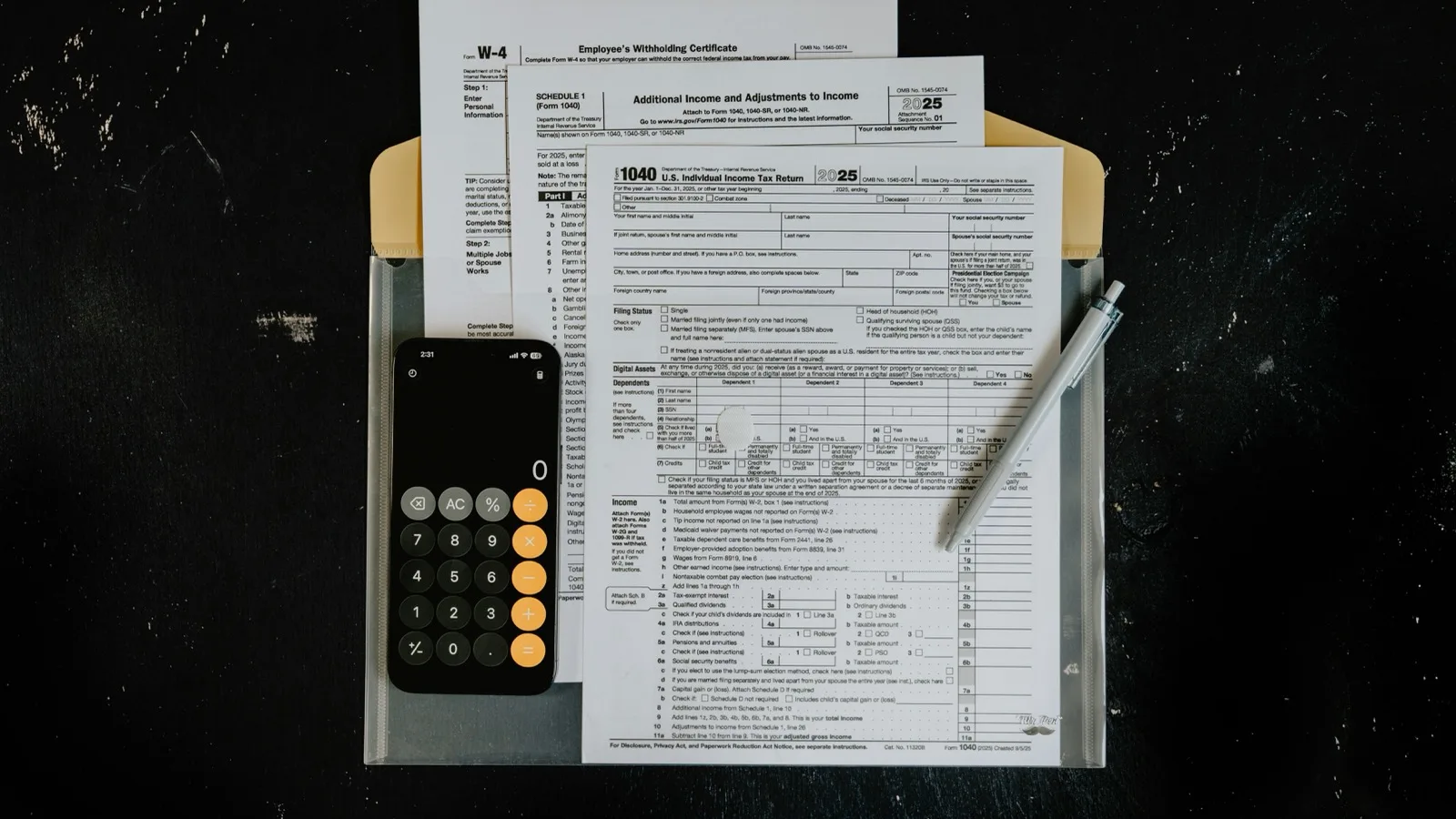
The first time you open a UAE corporate tax return, it does not look like a form. It looks like a project. There is a progress bar across the top with up to nine sections, a set of elections you are asked to make before you have seen a single number, and a schedule that wants your balance sheet line by line. Most owners close the tab and call their accountant.
That reaction is reasonable, but the return is more manageable than it first appears — as long as you know what it is asking and you have the answers ready before you log in. This guide walks through the filing as it actually happens on the portal, in the order you meet it.
What the corporate tax return is
It is one annual return per taxable person, submitted online through EmaraTax. There is no paper form, no downloadable PDF you fill in and email, and no quarterly instalments. You file once for the tax period, and you pay once.
Corporate tax is a self-assessment regime. The Federal Tax Authority does not calculate your liability and send you a bill — you calculate it, you declare it, and you sign for its accuracy. That declaration is the reason the return is long: the FTA is collecting the working that sits behind the number, not just the number.
The deadline is nine months after the end of your tax period, and the return and the payment share it. A financial year ending 31 December 2025 means both are due by 30 September 2026. Our guide to corporate tax filing deadlines has the full date maths for non-calendar year-ends.
Who has to file, and who actually presses submit?
Every registered taxable person files — profit or loss, active or dormant, mainland or free zone. A Qualifying Free Zone Person paying 0% on its qualifying income still submits a full return. A company that traded nothing all year still submits one. Registration and filing are two different obligations, and having no tax to pay removes neither.
Who presses the button depends on the structure:
- A company files for itself, or through a Tax Agent or Legal Representative appointed in EmaraTax.
- A Tax Group files a single return, submitted by the parent company for the group.
- An unincorporated partnership treated as a separate taxable person files through its appointed responsible partner.
One thing worth checking early: if you expect your accountant to file as your Tax Agent, that relationship has to exist inside EmaraTax. A verbal arrangement is not access.
What to have ready before you log in
The return pulls almost nothing from your bookkeeping software automatically. You are transcribing, so gather this first:
- Financial statements for the tax period — standalone, not consolidated (a Tax Group is the exception), prepared under IFRS or IFRS for SMEs, or on the cash basis if you are eligible for it.
- A breakdown of the income statement and balance sheet, not just the totals — the accounting schedule asks for revenue, cost of sales, interest, foreign exchange, disposals, assets, liabilities and equity separately.
- Your audit report, if you have one. Audited financial statements are required if your revenue for the period exceeded AED 50 million, and for every Qualifying Free Zone Person regardless of size.
- Headcount at the reporting date and shareholder details.
- Related-party and connected-person transactions — counterparties and amounts, both income received and expenditure paid.
- Brought-forward tax losses, and any losses transferred to or from another taxable person.
- Evidence of foreign tax paid, if you intend to claim a foreign tax credit.
- Anything in a foreign currency converted to AED at the Central Bank rate, to the nearest dirham.
The single most common reason a “quick evening filing” turns into a two-week job: the pre-populated details are wrong.
That last point deserves its own warning. The return opens with your registration data already filled in — legal name, address, taxable person type. If any of it is out of date, the portal does not let you correct it inside the return. It sends you to file a separate application to amend your registration, and you cannot finish the return until that application is submitted. If your licence has been renewed, your address has changed, or your activity list has moved on since you registered, fix it before filing season, not during it.
The return is not one long form — it is up to nine sections
The progress bar shows the sections you have to complete, and the number is not fixed. It runs from two to nine, and it is decided by your revenue and your taxable-person type — not by you. A small business that elects Small Business Relief sees a short return. A free zone company claiming qualifying income sees a long one.
The full set, in order:
- Taxpayer Details — pre-populated registration data, address, taxable person information, free zone flags.
- Free Zone Details — revenue schedule, non-qualifying revenue, the de minimis calculation, qualifying revenue, substance and confirmations.
- Elections — realisation basis, transitional rules, Small Business Relief, qualifying group transfers, business restructuring, foreign permanent establishment.
- Accounting Schedules — profit or loss, other comprehensive income, financial position, employees, audit, shareholders.
- Accounting Adjustments and Exempt Income — accounting income, realisation and transitional adjustments, exempt income.
- Reliefs — qualifying group transfers and business restructuring relief.
- Other Adjustments — non-deductible expenditure, interest capping, related parties and connected persons, qualifying investment funds.
- Tax Liability and Tax Credits — taxable income, tax losses, the calculation itself, tax credits, and a disclosure for any estimated figures.
- Review and Declaration — the summary, the confirmation, and the signature.
Sections 1 and 9 bookend every return. Everything between them appears because something in your profile or one of your answers made it relevant.
Filing, step by step
- Log in to EmaraTax with your credentials or UAE Pass, and select the correct taxable person. One login can hold several — this is where multi-company owners file under the wrong entity.
- Open Corporate Tax, then View All on the Corporate Tax Filings tile.
- Find the tax period on the returns dashboard and click File.
- Read the Instructions and Guidelines page, tick the confirmation box, and click Start.
- Work through Taxpayer Details. Confirm the pre-populated data is correct — or go and amend the registration first.
- Complete the sections the progress bar gives you. Every mandatory field in a section must be filled before the portal lets you move on, and Save as Draft works at any point.
- Enter all figures as positive numbers. The system decides where each one adds and where it subtracts, based on the nature of the field. Entering a minus sign to be helpful is how returns end up wrong.
- On Tax Liability and Tax Credits, most of the screen is greyed out and calculated for you. What you supply is losses, credits, and the disclosure of any estimates.
- Attach your financial statements — mandatory for everyone except taxable persons electing Small Business Relief. Other documents are optional, but if you skip one you have to give a reason.
- On Review and Declaration, check the summary, tick the declaration, click Submit, then confirm Yes.
- Note the reference number. It is what the FTA uses in any correspondence about this return.
- Pay under MY PAYMENTS. You can settle the whole liability with Pay All, or pay in parts with Select & Pay up to the due date.

The elections you can only make once
Section 3 arrives before you have entered a single figure, which makes it easy to click through. Two of the elections in it are effectively permanent:
- Realisation basis — disregards unrealised gains and losses for tax. Available only in your first tax period’s return, and irrevocable afterwards except in exceptional circumstances with FTA approval.
- Transitional rules — excludes the pre-corporate-tax portion of a gain on property, intangibles or financial assets you owned before your first tax period. Also first-period only, also irrevocable.
If you are filing your first return, these two deserve a conversation with your accountant before you open the portal, not while you are inside it.
The others are annual and reversible. Small Business Relief is the one most SMEs care about: a resident person with revenue of AED 3 million or less in the current and every previous tax period can elect it and pay no corporate tax for that period. It is not available to a Qualifying Free Zone Person or to a member of a multinational group. It is also not automatic — nobody applies it for you, and an eligible business that forgets to tick it pays 9% on everything above AED 375,000. The relief was due to expire with tax periods ending 31 December 2026; Ministerial Decision No. 131 of 2026 extended the AED 3 million threshold to tax periods ending on or before 31 December 2029. The mechanics are in our Small Business Relief guide.
Nil returns, loss returns and 0% returns
All three are real returns and all three are due on the same date.
A dormant company files. A loss-making company files — and filing on time is precisely what preserves the loss so you can set it against future profits. A Qualifying Free Zone Person taxed at 0% on its qualifying income files a full return, including the free zone schedule that proves the 0% was earned. “Nothing to pay” has never meant “nothing to submit”, and the late-filing penalty does not care which of the three you are.
What if a number is not final yet?
File anyway, and disclose it. The return has a dedicated question asking whether it contains estimated or provisional figures, with a field for the details. Using it is a normal part of filing — an audit that lands late, a valuation still in progress, an intercompany balance still being agreed.
Filing on time with a flagged estimate is a far better position than filing late with a perfect number. Late filing costs AED 500 for every month or part month for the first twelve months, and AED 1,000 a month from the thirteenth, under Cabinet Decision No. 75 of 2023. Late payment adds 14% a year, charged monthly on the unpaid tax. Both run automatically from the day after the deadline, and they stack.
The five mistakes that actually cost money
- Filing under the wrong taxable person. Check the entity name at the top of the screen before every action, every time.
- Stale registration data. Discovering in the last week of September that you need to amend your registration first is how a deadline gets missed.
- Treating no-tax-due as no-filing-due. Dormant, loss-making and 0% free zone companies all file.
- Leaving the audit to the end. If your revenue passed AED 50 million or you are a QFZP, you cannot file a complete return without audited statements, and auditors are busiest in exactly the month you need them.
- Assuming somebody else has it covered. A Tax Agent has to be appointed inside EmaraTax to file for you. Plenty of companies discover in month nine that nobody was formally authorised.
Behind all five sits the same thing: the return is only as good as the bookkeeping underneath it, and the FTA can ask for the documents behind any figure for years afterwards. Our guide to record-keeping requirements covers what to retain and for how long.
If you are the one preparing returns rather than signing them, the field-level detail — every schedule, what triggers it, and how the sections chain together — is in our companion piece on the UAE corporate tax return format.
How QuickTax helps
We keep the books clean through the year so filing season is a review rather than a reconstruction, we get the audit lined up before it becomes urgent, and we prepare and submit the return in EmaraTax as your appointed agent — with the elections considered on time rather than clicked past. You keep the login and the visibility; we do the work inside it.
See how our accounting and tax service works →
This material is for reference and is not tax advice. Always verify current requirements on the official resources of the FTA and the UAE Ministry of Finance.
What this means for you
The return itself is long but predictable. What catches owners out sits either side of it — the data you walk in with, and the date you walk out by. Three things to act on:
Check your registration data first
If the pre-populated details are wrong, the portal sends you to amend your registration and the return cannot be completed until you do. Verify the licence, address and activities well before filing season, not in the final week.
Treat the elections as a decision, not a screen
The realisation basis and the transitional rules can only be elected in your first tax period, and they are irrevocable. Small Business Relief is annual but never automatic — an eligible business that forgets to tick it pays 9% above AED 375,000.
File and pay together, nine months out
The return and the payment share one deadline. Late filing runs at AED 500 a month for the first year and AED 1,000 after, with 14% a year on late payment on top — so a flagged estimate filed on time beats a perfect number filed late.
Frequently asked questions
When is the UAE corporate tax return due?
Nine months after the end of your tax period, and the payment shares that date. A financial year ending 31 December 2025 means the return and the tax are both due by 30 September 2026. There are no quarterly instalments and no advance payments — one return, one payment, once a year.
Do I have to file if my company made no money?
Yes. A dormant company files, a loss-making company files, and a Qualifying Free Zone Person taxed at 0% files a full return. Filing on time is also what preserves a tax loss so you can set it against future profits. Having nothing to pay has never meant having nothing to submit.
Can my accountant file the corporate tax return for me?
Yes, but the relationship has to exist inside EmaraTax. A Tax Agent or Legal Representative must be appointed on the portal before they can file on your behalf — a verbal arrangement gives them no access. For a tax group the parent company files; for an unincorporated partnership, the appointed responsible partner does.
What is the penalty for filing a corporate tax return late?
AED 500 for each month or part month for the first twelve months, then AED 1,000 a month from the thirteenth, under Cabinet Decision No. 75 of 2023. Late payment adds 14% a year, charged monthly on the unpaid tax. Both start automatically the day after the deadline and can run together.
Can I file if some of my figures are not final?
Yes. The return has a dedicated question asking whether it contains estimated or provisional figures, with a field for the details. Filing on time with a flagged estimate is a much better position than filing late with a perfect number — the late-filing penalty accrues monthly regardless of the reason.