How to Open a Company in the UAE: The Complete 2026 Guide
The license is the easy part. Choosing the right jurisdiction, passing bank compliance, and staying on top of tax are what decide whether your UAE company runs smoothly.
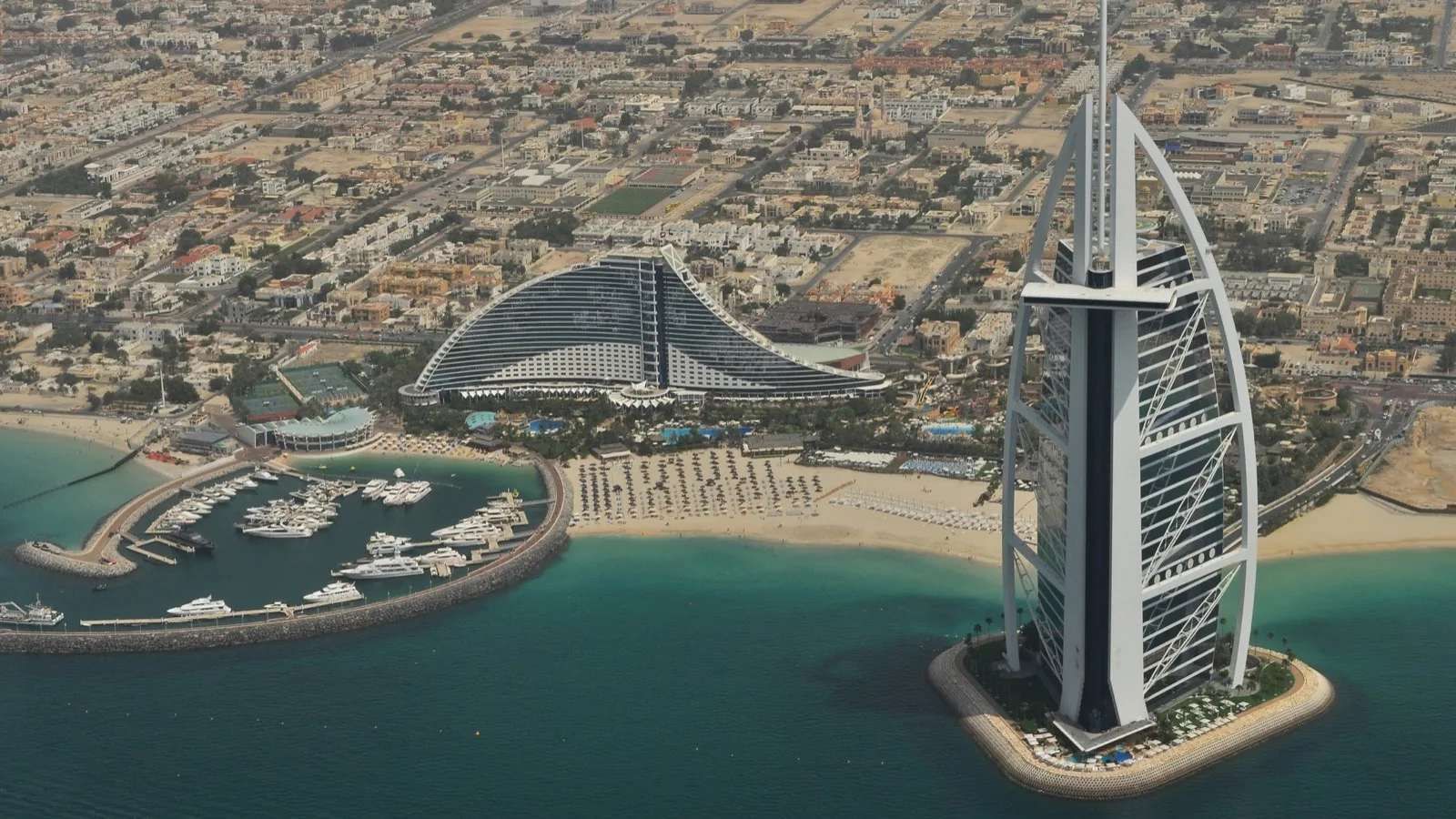
Opening a company in the UAE in 2026 is faster and more founder-friendly than it has ever been — but it is also a more serious decision than the “set up in 3 days, pay 0% tax” headlines suggest. The license is the easy part. Choosing the right jurisdiction, passing bank compliance, and staying on top of corporate tax and accounting are what actually determine whether your UAE company runs smoothly or becomes a recurring headache.
This guide walks you through the entire process end to end: which structure to choose, what it really costs in the first year, the step-by-step registration, opening a bank account, and the tax and bookkeeping obligations that start the moment your license is issued.
Quick answer: To open a company in the UAE you (1) choose mainland, free zone, or offshore, (2) select your business activity and trade name, (3) get initial approval and your license, (4) obtain your establishment card and residency visa, (5) get your Emirates ID, and (6) open a corporate bank account. A free zone company is typically ready in 5–14 working days, with a realistic all-in first-year budget of AED 18,000–45,000 depending on the zone, license, and number of visas.
Why entrepreneurs choose the UAE in 2026
The UAE remains one of the world’s strongest hubs for international business, and the fundamentals are genuine: there is no personal income tax, a competitive 9% corporate tax with a 0% band on the first profits, 100% foreign ownership across free zones and most mainland activities, a stable currency pegged to the US dollar, and direct access to markets across the Middle East, Asia, Africa, and Europe.
What changed is the maturity of the market. Since corporate tax was introduced in June 2023, the UAE is no longer a “zero-tax, no-questions” jurisdiction. Banks run real compliance checks, free zones increasingly require audited financial statements, and the tax authority expects proper accounting records. None of this makes the UAE less attractive — it makes preparation the difference between a clean setup and an expensive one. Founders who treat structure, banking, and compliance as part of the plan from day one are the ones who benefit from the stability and credibility the UAE offers.
First decision: mainland, free zone, or offshore
Everything else flows from this choice, so it is worth getting right. Your jurisdiction determines where you can legally trade, your ownership rules, your visa quota, and how easily you can open a bank account.
| Mainland | Free Zone | Offshore | |
|---|---|---|---|
| Best for | Selling inside the UAE, retail, services, government contracts | International/online business, consulting, IT, e-commerce, holdings | Asset holding, IP, international structuring |
| Trade inside the UAE | Yes, anywhere | Only via a local distributor or mainland branch | No |
| Foreign ownership | 100% for most activities | 100% | 100% |
| Residency visas | Yes (office-dependent quota) | Yes (package-dependent) | No |
| Office requirement | Usually a physical office (Ejari lease) | Flexi-desk often sufficient | None |
| Licensing authority | Department of Economy (e.g. Dubai DET) | The free zone authority (DMCC, IFZA, RAKEZ, etc.) | Offshore registry (RAK ICC, JAFZA Offshore) |
| Typical setup time | 7–15 working days | 5–14 working days | 2–7 working days |
A simple way to decide: if your customers are inside the UAE, lean mainland. If your customers are mostly international and you trade online or provide services abroad, a free zone is usually the practical and cost-effective route. If you only need a vehicle to hold assets, shares, or intellectual property — not to operate day to day — offshore fits.
A common real-world pattern is to start in a free zone for fast setup, low cost, and quick visas, then add a mainland presence later (through a branch or distributor) once local UAE sales justify it — without re-registering the original company.
Choosing a free zone
There are more than 40 free zones in the UAE, and they are not interchangeable. Each has its own pricing, allowed activities, visa rules, and reputation with banks. Picking the wrong one can mean higher renewals, banking friction, or a license that does not actually cover what you do.
| Free Zone | Indicative first-year cost | Notable for |
|---|---|---|
| Meydan (Dubai) | from ~AED 12,500 (1 visa) | One of the most affordable Dubai addresses; IT, consulting, e-commerce |
| IFZA (Dubai) | from ~AED 14,900 | 1,500+ activities, multiple visas, transparent packages |
| DMCC (Dubai) | from ~AED 30,000+ | Premium JLT address; trading, commodities, crypto, fintech |
| SHAMS (Sharjah) | from ~AED 5,750 | Budget media/creative and service licenses |
| Ajman Free Zone | from ~AED 5,000 | Lowest entry point; trading and services |
| RAKEZ (Ras Al Khaimah) | from ~AED 11,600 | Manufacturing, trading, holdings; strong value |
| RAK ICC | from ~AED 8,500 | Offshore holding/IP structures (no visa, no operations) |
Figures are indicative headline costs for planning only; real first-year totals depend on visas, office, and activity. Always confirm the current official package before committing.
The cheapest license is rarely the cheapest company. A zone with no included visa, or one outside Dubai when you need a Dubai address for clients, can cost more in the end. Match the zone to three things: your activity, whether you need a prestigious Dubai address, and how many visas you actually need.
If you would rather not compare dozens of zones by hand, the QuickTax free zone finder asks a few quick questions about your activity, budget, and visa needs and suggests the zones worth shortlisting — a practical starting point before you commit.
Dubai vs Abu Dhabi vs the Northern Emirates
Where you incorporate matters as much as which zone you pick.
- Dubai is the most recognized address worldwide and the easiest to explain to international clients and banks. It is also the most expensive on average. Zones like Meydan and IFZA keep Dubai accessible for service businesses; DMCC and DIFC sit at the premium end.
- Abu Dhabi is the capital and a strong choice for finance, energy, and government-adjacent business. ADGM is a respected financial free zone with English common law, well suited to funds, fintech, and holding structures.
- Northern Emirates (Sharjah, Ras Al Khaimah, Ajman, Fujairah) offer the same 100% ownership and zero personal income tax at roughly half the Dubai cost. Zones like RAKEZ, SHAMS, and Ajman Free Zone are excellent value for trading, manufacturing, and holdings — the trade-off is that a non-Dubai address can be a commercial limitation if your clients expect one.
A frequent, cost-smart approach: incorporate in a Northern Emirates zone for the savings, then upgrade to a Dubai address only if and when your client base demands it.

Legal structures you can register
Within your chosen jurisdiction you will pick a legal form. The most common are:
- LLC (mainland) — a limited liability company for one or more shareholders, ideal for trading in the local market. Liability is limited to invested capital.
- Sole Establishment (mainland) — a single-owner structure, simpler but with the owner personally tied to the business.
- FZE (Free Zone Establishment) — a free zone entity with a single shareholder.
- FZ-LLC / FZCO (Free Zone Company) — a free zone entity with multiple shareholders.
- Branch office — an extension of an existing foreign company, performing the parent’s activities rather than being a separate legal entity.
- Offshore (IBC) — an International Business Company for holding and international activity only, with no UAE operations or visas.
Your activity selection sits alongside this and is one of the most important steps of all: it defines your license category (commercial, professional, or industrial), what you can legally do, and how banks read your business model. You cannot provide a service that is not on your license, so it pays to scope activities correctly the first time.
How to open a company in the UAE: step by step
Here is the full process, in the order it actually happens.
Step 1 — Define your business activity and model. Decide what you do and where your customers are. This drives jurisdiction, license type, and activity list.
Step 2 — Choose jurisdiction and legal structure. Mainland, free zone, or offshore; then LLC, FZE, FZ-LLC, branch, or sole establishment.
Step 3 — Reserve your trade name. Prepare two or three options. The name must be unique, must not contain prohibited or offensive words, and must carry the legal-form suffix (e.g. LLC).
Step 4 — Get initial approval. This is the government’s “no objection” to your business being established. It lets you proceed but does not yet authorize you to operate.
Step 5 — Sign documents and pay fees. Sign the application, Memorandum of Association (MOA) or free zone agreements, and pay the government and license fees. Your trade license is then issued.
Step 6 — Get your Establishment Card and open your immigration file. This unlocks visa processing for you and any employees.
Step 7 — Process your residency visa and Emirates ID. Entry permit, medical test, biometrics, and the visa stamp. The Emirates ID is essential for almost everything that follows, including banking and tenancy.
Step 8 — Open a corporate bank account. Usually the longest and most sensitive stage — covered in detail below.
A free zone setup commonly reaches the license stage in 5–14 working days; mainland in roughly 7–15 days with a ready office. The bank account is a separate timeline.
Documents you’ll typically need
While requirements vary by emirate and free zone, most setups ask for:
- Valid passport copies of all shareholders and managers
- Passport-size photographs
- Proof of residential address from your home country
- A short business plan or activity description (increasingly requested for banking)
- Memorandum of Association (for LLCs and similar forms)
- A lease agreement (Ejari for mainland; facility/flexi-desk agreement for free zones)
Regulated activities (financial, medical, legal, and others) may require extra approvals from the relevant authority.
How much it really costs in the first year
The number you see advertised — “license from AED 12,000” — is the start, not the total. A realistic first-year budget for a typical free zone company in Dubai looks more like this:
| Cost item | Indicative range (AED) |
|---|---|
| Free zone license | 12,000–50,000 |
| Registered address / flexi-desk | 3,000–8,000 |
| Founder residency visa + Emirates ID | 4,000–7,000 |
| Bank account opening (with assistance) | 4,000–11,000 |
| Corporate Tax + VAT registration | 2,500–6,000 |
| Bookkeeping (first year) | 11,000–18,000 |
| Audit (required by many zones) | 5,000–15,000 |
For most service and trading companies, a sensible all-in first-year figure lands around AED 18,000–45,000, and higher in premium zones like DMCC. Mainland setups typically run AED 15,000–50,000 plus office rent. The budget items that catch founders out are almost always the same ones the headline price excludes: visas, address, banking support, and the compliance costs (registration, bookkeeping, audit) that begin immediately after incorporation.

Residency visa and Emirates ID
Setting up a company gives you and, in many cases, your family the right to apply for UAE residency. The standard route is a 2–3 year investor/partner visa (typically AED 3,500–7,000 per person). For larger commitments, the Golden Visa offers 10-year residency — for example, for significant business or property investment, with eligibility criteria that the UAE continues to refine.
The Emirates ID, issued as part of the visa process, is the key that unlocks day-to-day life: opening a personal bank account, signing tenancy contracts, getting a UAE driving license, and more. Budget time for the medical test and biometrics, which require you to be physically present in the UAE.
Opening a corporate bank account: the honest part
This is where many founders underestimate the UAE in 2026. Since 2023, banks have tightened compliance significantly. Opening a corporate account is no longer a formality — it is a project with its own rules, and approval is not automatic.
Expect banks to scrutinize not just your documents but your business model: who your customers are, where revenue comes from, and whether your activity matches your license. Strong preparation — a clear business description, founder résumés, evidence of genuine activity, and a coherent structure — materially improves your odds. Minimum balance requirements commonly range from AED 25,000 to AED 100,000+ for traditional banks, while fintech and digital banks (such as Wio or digital arms of established banks) can offer lower or no-deposit options that suit early-stage companies.
The practical advice: do not treat banking as an afterthought. Choose your jurisdiction and activity with the bank in mind, prepare your file properly, and apply to more than one provider. Mismatched activities and weak documentation are the most common reasons for rejection and delay.
What banks typically want to see:
- Trade license, MOA, and certificate of incorporation
- Shareholder and manager passports plus Emirates IDs
- A clear business description or short business plan
- Proof of activity — contracts, invoices, a company website, or supplier/customer agreements
- Founder résumés showing relevant background
- Expected transaction volumes and the countries you will deal with
- Proof of address and, in some cases, source-of-funds documentation
The stronger and more coherent this file, the faster the approval — and the lower the chance of an account being opened and then frozen during a later review.
Taxes: what your UAE company will actually owe
Tax is where the “0%” headlines need careful reading. Here is the real picture for 2026.
Corporate Tax (CT). The UAE applies 0% on the first AED 375,000 of taxable profit and 9% above that. This applies to both mainland and free zone businesses — it is one federal regime, not two separate worlds. Companies must register for corporate tax with the Federal Tax Authority (FTA) and file a return each year, even when no tax is due.
Free Zone 0% (QFZP). Free zone companies can pay 0% on qualifying income if they meet the Qualifying Free Zone Person conditions: adequate economic substance in the zone, qualifying income as defined by the regulations, audited financial statements, transfer-pricing compliance, and staying within the de minimis limit (non-qualifying income must not exceed 5% of total revenue or AED 5 million, whichever is lower). The 0% is not automatic — it must be earned and documented, and a single misclassified income stream can break it.
Small Business Relief (SBR). Resident businesses with revenue up to AED 3 million can elect SBR and effectively pay 0% corporate tax — a valuable relief for early-stage companies, currently available through 31 December 2029.
VAT. Value Added Tax is 5%, with mandatory registration once taxable turnover exceeds AED 375,000 (voluntary registration is possible from AED 187,500). VAT-registered companies file periodic returns.
Other. There is no personal income tax, and withholding tax on dividends, interest, and royalties is currently 0%. The UAE is also moving toward e-invoicing, with rollout phases expected to broaden — another reason to keep clean digital records from the start.
The takeaway: low tax in the UAE is real, but it is conditional. It depends on correct registration, proper accounting under IFRS, and meeting deadlines — not on the jurisdiction alone.
Three worked tax examples
A few simplified scenarios show how the same rules produce very different bills:
- Mainland LLC, AED 600,000 profit. The first AED 375,000 is taxed at 0%, the remaining AED 225,000 at 9% — roughly AED 20,250 in corporate tax. If revenue is under AED 3 million, the company could instead elect Small Business Relief and pay 0% (through 31 December 2029).
- Free zone FZCO, all income qualifying, AED 2 million profit. If the company meets every QFZP condition — substance, audited accounts, qualifying activities, within de minimis — it pays 0% on the full amount. Lose QFZP status, and the same profit is taxed at 9% above AED 375,000, i.e. roughly AED 146,000.
- Free zone FZE with mixed income. Say 4% of revenue is non-qualifying. That is within the 5% de minimis limit, so QFZP holds and qualifying income stays at 0%. Push non-qualifying income to 6%, and the company can lose QFZP for the period entirely — turning a 0% bill into a 9% one. This single threshold is why clean income classification matters so much.
These are illustrative, not a substitute for a proper calculation on your actual numbers — but they show the pattern: the rate you pay is decided by structure and documentation, not by the free zone label.
After your license: accounting and compliance
This is the stage most setup guides skip, and it is exactly where penalties and stress accumulate. The moment your license is issued, the compliance clock starts:
- Register for Corporate Tax with the FTA within the required window after incorporation.
- Maintain proper accounting records under IFRS (or IFRS for SMEs) — and keep them for at least seven years.
- File your corporate tax return within nine months of your financial year-end.
- Register and file VAT if your turnover crosses the threshold.
- Prepare audited financial statements if your free zone or QFZP status requires them.
“PDF invoices plus manual fixes in a spreadsheet” is the setup that quietly creates risk: missed deadlines, broken QFZP eligibility, and last-minute panic before filing. Clean, automated records reduce errors, make audits painless, and keep your 0% or low-tax position defensible if the FTA asks questions. Treating accounting as part of the setup — not a “later” problem — is what makes the favorable tax position you set out to get actually hold.
Common mistakes to avoid
- Choosing the cheapest zone, not the right one. A license with no visa, or in the wrong emirate, often costs more later.
- Treating banking as an afterthought. Activity and structure should be chosen with the bank in mind.
- Mismatching activity and business model. This triggers stricter bank reviews and approval delays.
- Ignoring substance for QFZP. Real presence and audited accounts are required to keep the 0% rate.
- Forgetting compliance deadlines. CT registration and filing deadlines apply even with zero tax due; missing them means penalties.
Doing it yourself vs using a setup partner
It is possible to register a UAE company yourself. The trade-off is time, the risk of choosing the wrong structure or zone, and the very real chance of banking delays if your file is not prepared the way banks expect. Re-registering to fix a wrong jurisdiction can cost AED 18,000–25,000 plus weeks of downtime — far more than getting it right the first time.
A good setup partner compresses the timeline, matches your structure and activity to your model and your bank, and prepares your application so it clears compliance the first time. The best partners do not disappear after the license — they stay on for the accounting and tax compliance that keep the company healthy.
That is exactly how QuickTax works: we handle your UAE company setup end to end — jurisdiction, license, banking, and the tax and accounting that follow — so it is right from day one. Build your setup plan →
What this means for you
Opening the company is the easy 5–14 days; the structure, the bank, and the compliance are what actually decide how it runs. It comes down to three things to act on:
Choose the jurisdiction for your customers, not the price
Mainland if you sell inside the UAE, a free zone if you trade internationally or online, offshore only to hold assets. The cheapest license — no visa, or the wrong emirate — usually costs more later; match the zone to your activity, your need for a Dubai address, and your real visa count.
Treat the bank account as a project from day one
Since 2023 a corporate account is not automatic — banks scrutinise your business model, not just your papers. Pick activity and structure with the bank in mind, prepare a clear file (license, MOA, proof of activity, founder résumés), and apply to more than one provider.
The compliance clock starts at the license
Register for corporate tax with the FTA, keep IFRS records for seven years, and file your CT return within nine months of year-end — even at 0%. QFZP 0% is conditional on substance, audited accounts and the de minimis limit; clean accounting is what keeps it defensible.
Frequently asked questions
How long does it take to open a company in the UAE?
A free zone company is usually ready in 5–14 working days, and a mainland company in roughly 7–15 days with a ready office. Opening the corporate bank account is a separate process that can take 2–8 weeks.
How much does it cost to set up a company in the UAE?
Headline licenses start from around AED 5,000–15,000, but a realistic all-in first-year budget — including address, visa, banking, and compliance — is typically AED 18,000–45,000 for a free zone company and AED 15,000–50,000 plus rent for a mainland company.
Can a foreigner own 100% of a UAE company?
Yes. Free zones allow 100% foreign ownership by default, and since 2020–2021 most mainland activities also allow it without a local sponsor. A few strategic sectors are exceptions.
Do free zone companies pay corporate tax?
They can pay 0% on qualifying income if they meet the Qualifying Free Zone Person (QFZP) conditions, including adequate substance, audited financials, and the de minimis limit. Non-qualifying income is taxed at 9%. The 0% is conditional, not automatic.
Do I need to be in the UAE to set up a company?
Much of the registration can be done remotely, but you generally need to be physically present for visa biometrics and, in most cases, to open your first corporate bank account.
Do I have to register for VAT?
VAT registration is mandatory once taxable turnover exceeds AED 375,000, and voluntary from AED 187,500.
What happens after I get my license?
Compliance begins immediately: register for corporate tax, keep proper IFRS accounting records, file your annual CT return, handle VAT if applicable, and prepare audited statements where required.