Setting Up a Company in DMCC: Cost, Accounting, Tax and Audit
DMCC is Dubai’s flagship free zone — a prestigious JLT address, a real business district, and a mandatory annual audit. It’s rarely the cheapest option, and that’s the point. Here’s what setup, tax, and compliance actually involve.
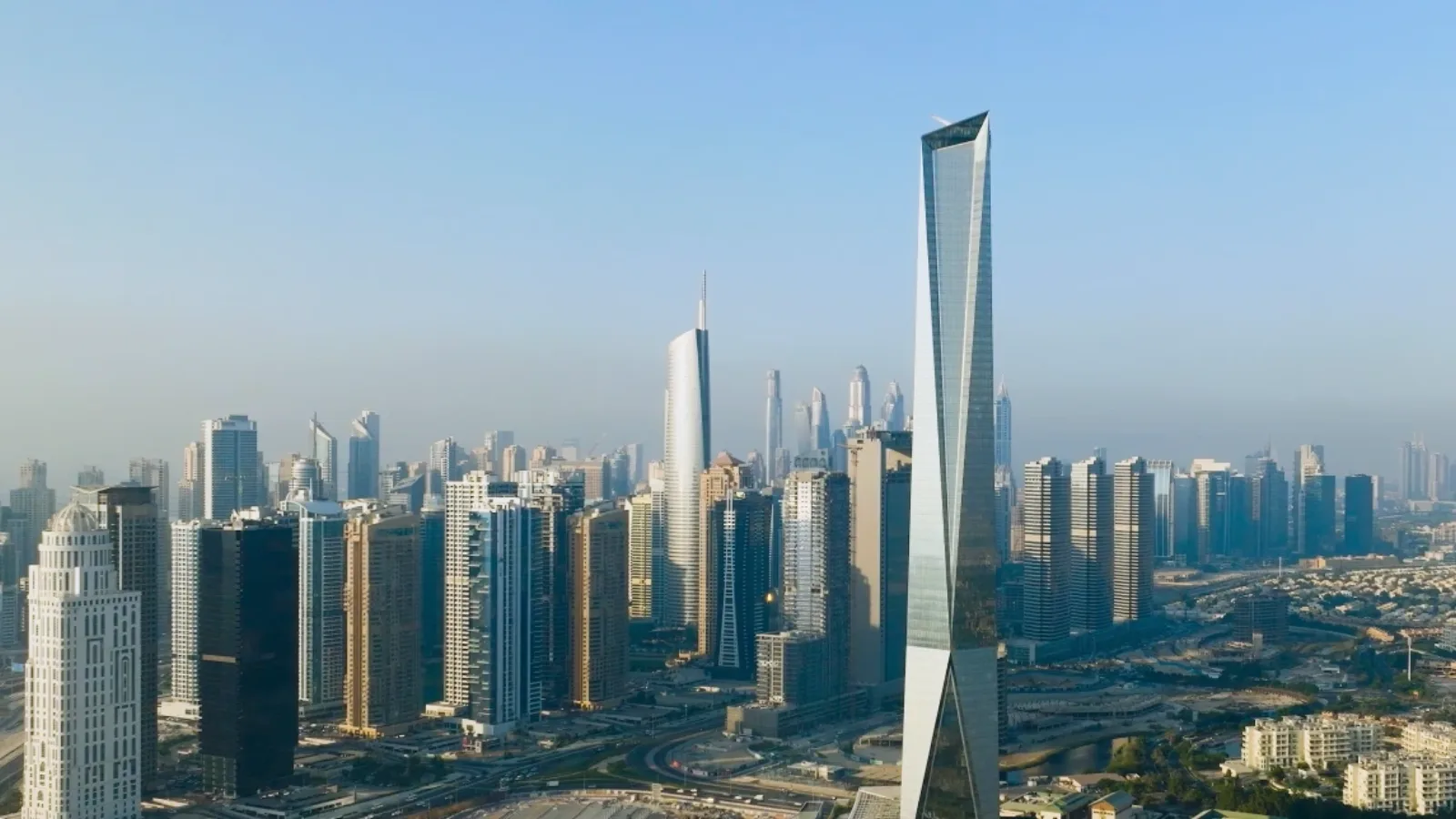
DMCC is one of Dubai’s most well-known and prestigious free zones. Setting up here is relatively straightforward: registration runs through an online portal, the requirements are well documented, and the free zone has years of experience with international businesses.
But DMCC is rarely the most affordable option. It’s generally chosen by companies that value a prestigious address, high-quality office infrastructure, a strong corporate reputation, and an established business community. If your only goal is the lowest-cost legal address in the UAE, other free zones are often cheaper. If your business plans to grow, hire, meet clients, and operate from a real office in Jumeirah Lakes Towers (JLT) or Uptown Dubai, DMCC is often an excellent long-term choice.
Quick answer: DMCC gives you a premium Dubai free zone company in JLT. The official setup fees start at around AED 39,402, but the realistic minimum first-year cost — including a basic Flexi Desk — is usually AED 50,000+. Unlike many lower-cost zones, DMCC requires an annual audit for every company, even the smallest. You’re paying for a real business district and a strong brand, not just a licence.
What DMCC is
DMCC stands for Dubai Multi Commodities Centre. It was established by the Government of Dubai in 2002 to strengthen the city’s position as a global hub for commodities trading. Originally tied to gold, diamonds, precious metals, tea, and coffee, it has grown into a major business district spanning JLT and Uptown Dubai. Today it’s home not only to trading companies but to IT businesses, consultancies, marketing agencies, holding companies, financial and investment firms, e-commerce businesses, and much more.
One of DMCC’s defining features is the concentration of business in a single district. It is far more than a licence with a registered address — JLT is a real commercial area with office towers, banks, service providers, restaurants, coworking spaces, hotels, and business centres. Some founders choose DMCC not for the licence itself but because their customers, partners, or suppliers are already nearby. The diamond trade is a good example: DMCC has built a strong ecosystem for diamonds and precious stones, so for new companies in that industry it isn’t simply a free zone — it’s where their market physically exists.
DMCC at a glance
| Parameter | DMCC |
|---|---|
| Company registration + Establishment Card (excl. visas and office) | AED 39,402 |
| Legal address | Included |
| Physical office available | Yes — JLT, Dubai |
| Annual audit required | Yes — mandatory for all companies |
The AED 39,402 Business Acceleration Offer includes the standard official DMCC fees for the Application, Registration, Articles of Association, Licence, and Establishment Card. It does not include visas, medical exams, Emirates ID, insurance, office rental, accounting, or audit fees.
Why entrepreneurs choose DMCC
Companies rarely choose DMCC because it’s the cheapest option. They choose it for other reasons:
- A strong brand. For some clients, banks, and partners, a DMCC address looks more familiar and established than a smaller or lesser-known free zone.
- A broad range of office options. A business can start with a Flexi Desk and later move to a serviced or full physical office — useful for companies that don’t want to switch free zones a year or two after launch.
- A large business community. JLT and Uptown Dubai are home to tens of thousands of professionals, and DMCC brings together companies from more than 180 countries.
- Convenience for in-person business. If your customers or partners are around Dubai Marina, JLT, JBR, Dubai Media City, Dubai Internet City, or Sheikh Zayed Road, a DMCC office is a practical location. One of our clients recently chose DMCC simply because a partner wanted “the most prestigious jurisdiction.”
Company registration cost in DMCC
The basic setup consists of the core official fees:
| Item | Cost |
|---|---|
| Licence + Establishment Card (allows hiring) + legal address | AED 39,402 |
Office space is considered separately:
| Office solution | Cost |
|---|---|
| Flexi Desk | AED 16,000–19,000 |
| Serviced Desk | AED 22,000–35,000 |
| Serviced Office | AED 35,000–140,000 |
| Physical office | Usually priced per sq. ft. |
For a minimal setup — where the business only needs a legal address and isn’t renting a full office yet — a Flexi Desk (around AED 16,000–19,000 a year) is usually the first option. As a result, the minimum first-year cost in DMCC, excluding visas but including a basic Flexi Desk, is usually around AED 50,000+ — noticeably higher than many lower-cost free zones.
Want a realistic all-in figure for your activity and visa count? The QuickTax company setup calculator gives you one in a couple of minutes before you commit.
DMCC as a business district, not just an address
DMCC is very different from many free zones because it’s part of a real urban business district. JLT isn’t just an address printed on a licence — it’s a large area with office towers, metro access, restaurants, banks, hotels, and residential buildings. For companies that value an office, client meetings, and a genuine presence in Dubai, DMCC reads as a more mature option than purely low-cost free zones. That’s the essence of the trade-off: you pay more, and in return you get a place your company can actually operate from and grow into.
What happens after your licence is issued
Many founders assume that once the licence is issued, the company is fully operational. In practice, registration is only the beginning. After incorporation you will typically need to:
- Arrange a legal address or rent office space, as required by your licence or business needs.
- Open a corporate bank account and pass the bank’s compliance and due-diligence checks.
- Register for UAE Corporate Tax and obtain a Tax Registration Number (TRN).
- Maintain proper accounting records and upload supporting documents regularly.
- Register for VAT if the company reaches the statutory threshold.
- Complete an annual audit — for DMCC companies this is mandatory.
- Renew the licence and meet all free zone renewal requirements.
- Deregister and liquidate the company properly if it stops operating.
Most QuickTax clients delegate these administrative responsibilities to our team so they can focus on the business itself.
Accounting for a DMCC company
Once incorporated, accounting becomes ongoing. A typical DMCC company needs to register for corporate tax, maintain proper records, keep supporting documents, monitor the VAT threshold, file corporate tax returns, and — critically for DMCC — complete an annual audit and submit audited financial statements to DMCC, even the smallest companies, as part of compliance and licence renewal.
Accounting in the UAE is generally straightforward if documents are uploaded regularly. The recurring challenge isn’t transaction volume — it’s postponing bookkeeping. After eight to twelve months, reconstructing transactions and explaining historical payments becomes much harder. At QuickTax we keep records clear not only for the owner but for tax advisers, auditors, banks, and regulators, which is why your accountant may occasionally ask about a payment that seems obvious — those questions prevent problems later at VAT, corporate tax, audit, or bank-review time. Each month we ask clients to upload invoices, bills, and bank statements (a photo or PDF in the chat is enough) and keep the records accurate and compliant.
Corporate tax for a DMCC company
Every DMCC company is subject to UAE Corporate Tax, which applies to financial years beginning on or after 1 June 2023. The first step is registering with the FTA to get a TRN and Corporate Tax Registration Certificate. Registering doesn’t mean you immediately pay tax — that depends on taxable profit, the nature of the income, and your tax status. The standard rates:
| Taxable income | Corporate tax rate |
|---|---|
| Up to AED 375,000 | 0% |
| Above AED 375,000 | 9% |
Free zone companies may qualify for the QFZP regime and tax qualifying income at 0% — but not automatically. DMCC itself notes that companies seeking the 0% rate must assess whether they meet the QFZP requirements, including substance, transfer pricing, and audited financial statements. In practice, treat QFZP as a tax-planning exercise: review your income structure, customer base, and business model well before your first filing.
VAT: the biggest myth about free zone companies
Myth: free zone companies don’t pay VAT. Reality: incorrect.
UAE VAT rules generally don’t depend on whether a company is in DMCC, IFZA, Meydan, RAKEZ, or on the mainland. Once a company reaches the threshold, it must register with the FTA.
| VAT registration | Threshold |
|---|---|
| Voluntary registration | From AED 187,500 |
| Mandatory registration | AED 375,000 |
For UAE-resident businesses, VAT registration is mandatory once taxable supplies and imports exceed AED 375,000 over the previous 12 months, or are expected to in the next 30 days. After registering, the company gets a VAT TRN, charges 5% on taxable UAE supplies, and files periodic (usually quarterly) returns. A DMCC company monitors the threshold exactly like any other UAE business. QuickTax tracks each client’s turnover and flags the threshold before it’s crossed.
QFZP in brief
The Qualifying Free Zone Person regime lets qualifying income be taxed at 0% — but it’s not an automatic exemption. A company generally must be incorporated in a UAE free zone, maintain adequate substance, earn qualifying income, comply with transfer-pricing rules, prepare audited financial statements, not elect into the standard regime, and stay within the de minimis limit for non-qualifying income. Qualifying activities include manufacturing and processing, trading in qualifying commodities, holding shares and securities for investment, ship ownership and operation, reinsurance, fund and wealth management, headquarters and treasury services to related parties, aircraft financing and leasing, distribution in or from a Designated Zone, logistics, and ancillary activities. Eligibility depends on the real business model — customer location, service nature, contracts, substance, related-party links, and payment flows — not just the licensed activity.
Audit requirements in DMCC
This is one of the most important practical considerations when choosing DMCC. In many free zones an audit is only valuable in specific situations — bank financing, investors, a sale, or demonstrating performance to partners. For DMCC, an audit is not merely good practice — it’s a mandatory compliance requirement.
Why it’s required. DMCC requires member companies to submit audited financial statements through the DMCC Member Portal. To renew a licence without restrictions or delays, a company must complete an audit every year. For many small businesses this is an extra obligation the business itself may not need, but DMCC requires it as part of its regulatory framework.
Who can perform it. The audit must be done by a licensed audit firm whose auditor takes professional and legal responsibility for the opinion — and DMCC adds a further requirement: the firm must also be an approved DMCC auditor. A professional licence alone is not enough. QuickTax manages this for clients by engaging an appropriately licensed, DMCC-approved firm, with the auditor working mainly through the accountant who kept the records all year.
When it’s due. DMCC requires companies to upload the audited financial statements and the signed, stamped Audited Financial Statements Summary Sheet through the Member Portal within six months after the financial year-end. For a 31 December year-end, that’s a 30 June deadline the following year.
If you miss the deadline. Late submission can lead to restrictions on the licence and complications at renewal. If uninterrupted operations matter, the audit should be finished well before the renewal deadline. Because QuickTax keeps records in an audit-ready format all year and our dedicated audit team coordinates the process, the engagement is usually far more efficient than reconstructing the whole year at the last moment — and the owner’s involvement stays minimal.
Start on the right footing
DMCC is the right choice when a prestigious Dubai address, real office infrastructure, and a strong business community matter to you — and when you’re prepared for the higher cost and the mandatory annual audit that come with them. The licence is only the start; the corporate tax registration, clean year-round bookkeeping, VAT monitoring, and the annual audit are what keep the company in good standing.
QuickTax handles all of it: we set up your DMCC company and then run the accounting, tax, and audit coordination that follow, so it’s right from day one. Build your setup plan →
What this means for you
DMCC is a premium Dubai free zone — you pay more and, in return, get a real business district, a strong brand, and a stricter compliance regime. It comes down to three things to act on:
Budget for AED 50,000+, not the headline fee
The AED 39,402 setup fee is the start, not the total. Add a Flexi Desk (AED 16,000–19,000), then visas, accounting, and the mandatory audit. DMCC makes sense when a prestigious JLT address and real office infrastructure genuinely add value to your business.
The annual audit is non-negotiable
Every DMCC company files audited statements through the Member Portal within six months of year-end, via a DMCC-approved auditor — even the smallest. Keep records audit-ready all year so renewal is never at risk.
Tax rules are the same federal regime
Register for corporate tax, monitor the AED 375,000 VAT threshold, and remember QFZP 0% is conditional on substance, qualifying income, audited accounts and the de minimis limit — the DMCC brand doesn’t change the FTA’s rules.
Frequently asked questions
Why is DMCC more expensive than other UAE free zones?
Because you’re paying for more than a licence. DMCC is a real business district in JLT with office towers, banks, and an established community from 180+ countries, plus a premium brand that reads well with banks and partners. The official setup fees start around AED 39,402, and a realistic first-year minimum with a basic Flexi Desk is usually AED 50,000+.
Is an annual audit really mandatory for every DMCC company?
Yes. DMCC requires all member companies — even the smallest — to submit audited financial statements through the DMCC Member Portal, and the audit firm must be a DMCC-approved auditor. The statements are due within six months of the financial year-end, and missing the deadline can restrict the licence and complicate renewal.
What is the real minimum first-year cost in DMCC?
For a minimal setup — licence, Establishment Card, legal address (AED 39,402) plus a basic Flexi Desk (AED 16,000–19,000) — expect around AED 50,000+, excluding visas. Serviced desks, serviced offices, and physical space cost considerably more, and audit and accounting are separate again.